What infrastructure does an AI workflow need before it touches real work?
A plain-English infrastructure checklist for AI workflows: identity, permissions, storage, logs, approvals, recovery, and cost control.
Quick answer
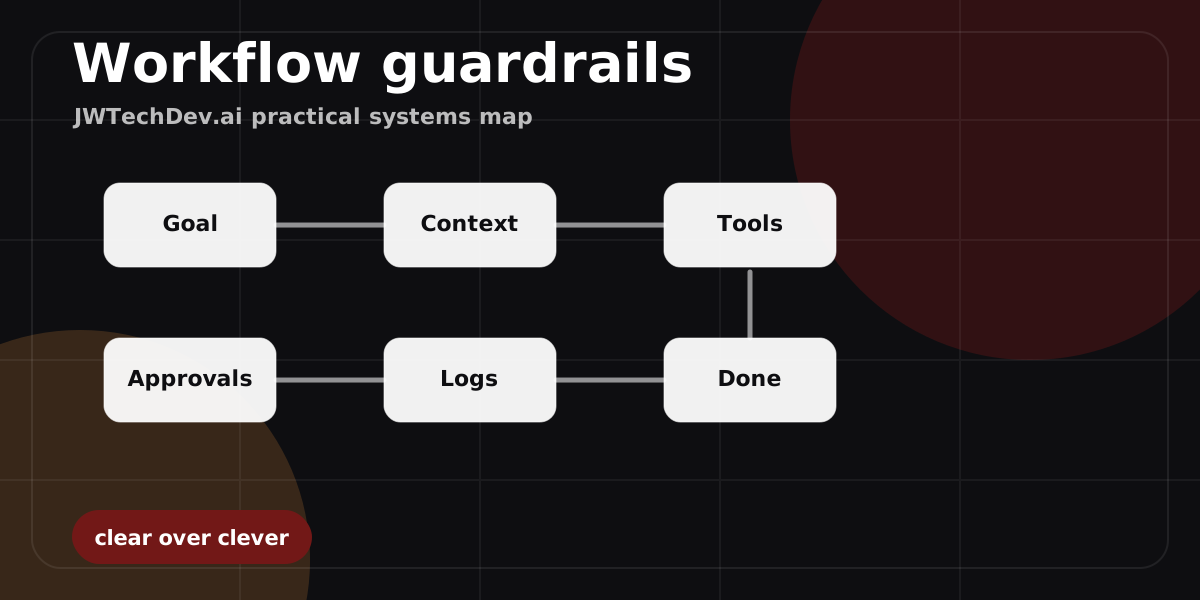
Before an AI workflow touches real work, it needs the same infrastructure discipline as any production-adjacent system: identity, permissions, input and output routing, storage, logs, approval gates, recovery, and cost control.
The infrastructure question comes first
A chatbot mainly responds. A workflow that can touch files, send messages, update records, run commands, or trigger tools creates operational risk. That risk is not solved by better wording. It is solved by infrastructure boundaries.
Before adding tools, define the job, the lane, the allowed systems, the approval gates, and the verification path. Without those pieces, the workflow is just a powerful autocomplete system wandering around your workspace.
The infrastructure behind the workflow
Identity
What account, role, or permission scope does the workflow use?
Context
What source material is allowed, trusted, and current?
Tools
What can it read, write, run, browse, or call?
Storage
Where do inputs, outputs, logs, drafts, and handoff notes live?
Approvals
What must a human approve before impact?
Observability
How do you know what happened and why?
Approval gates are not optional
Some work should stop for human approval every time. DNS changes, payment changes, live backend storage, outbound messages, deletion, credential handling, and public publishing all deserve a clear gate.
This does not make the system slower in a bad way. It makes the system usable. A good agent should move fast where the work is reversible and pause where the impact is real.
A simple first workflow
Start with research and drafting. Give the system a narrow question, approved source folders, a target output path, and a definition of done. Ask it to produce a draft, list assumptions, and record what still needs review.
That kind of workflow builds trust. Once it proves it can handle context, structure, and verification, you can gradually add more tools.
What infrastructure experts notice first
Infrastructure people do not only ask "can the model do it?" They ask: what identity is being used, where the logs go, what data is exposed, what happens when it fails, how it recovers, and who approves the risky step.
That is the differentiator. Agent work is not just prompt craft. It is systems design.
Is this workflow ready for tool access?
Pick the current state of your idea.
Workflow readiness checklist
0 of 6 checkedFAQ
Is an AI workflow the same as automation?
Not exactly. Automation follows predefined steps. AI-assisted workflows can use context and tools inside a bounded job, which makes permissions and review more important.
What is the safest first workflow?
A draft or research workflow that writes to a local output folder and cannot send, delete, publish, or change production systems.
Why does this need infrastructure?
Because real work needs identity, storage, logs, permissions, approvals, and recovery. The model is only one part of the system.
Want the working resource?
Request the Infrastructure Guardrails checklist before handing tools to any workflow that can touch real systems.
Request access